
Spotlight on Success
Featured Interview
Lynn Rogoff
“Spotlight on Success” is an interview series created by David Levine of I Am Your Virtual Professional. Its purpose is to amplify the voices of today’s business leaders. Each interview provides actionable insights that readers can implement immediately. No fluff, just practical wisdom that enables individuals to move forward with clarity and confidence.

Lynn Rogoff

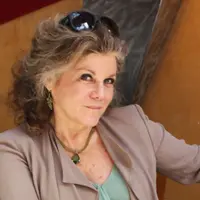
| Company | AMERIKIDS PRODUCTIONS |
|---|---|
| Role | CEO |
| LinkedIn Profile | https://www.linkedin.com/in/lynn-rogoff-a023934/ |
| Company Website | https://www.amerikids.com |
| Series Trailer | Bird Woman Sacajawea |
Lynn Rogoff is an Emmy-winning filmmaker, WGA-nominated writer, and CEO of Amerikids Productions. As a professor at NYIT and creator of the award-winning AI-enhanced series Bird Woman: Sacajawea, she works at the intersection of Indigenous storytelling, emerging technology, and education. Her work has won 12 international film festivals and streams globally on platforms including Amazon Prime, Herflix, and Red Nation TV. Her Interactive Character Chatbots, developed with Israel-based D-ID, demonstrate how AI can preserve culture rather than replace it.
Who Should You Nominate?
- Leaders doing meaningful work
- People with insights others can learn from
- Voices worth elevating
Interview Questions
1. What’s one strategy your business used recently that created meaningful growth?
We embraced emerging AI technology not as a replacement for creativity, but as a creative amplifier. In 2025, we released Episode 1 of Bird Woman: Sacajawea, combining traditional filmmaking with AI tools like Runway, MidJourney, and D-ID. This strategy allowed us to achieve what would have been financially impossible through conventional production. This cinematic historical drama went on to win 12 international film festivals and secure distribution on Herflix, Amazon Prime Video, and Red Nation TV. By positioning ourselves at the intersection of cultural legends and technology, we opened doors that traditional independent film pathways had closed.
2. How has AI or technology changed the way you operate or serve clients?
AI has fundamentally transformed our business model, shifting from being limited by budget to being limited only by imagination. We developed Interactive Character Chatbots in partnership with Israel-based D-ID, allowing students and audiences to have conversations with historical figures from our series, something that would have been science fiction just a few years ago. This work required critical decisions around tooling, guardrails, knowledge bases, and cultural integrity. This pivot enabled us to transition from simply creating motion pictures to additionally crafting immersive educational experiences. We’re now developing Episodes 2 & 3 using next-generation tools like Sora, Veo, and Kling, which means we can focus our human creativity on entertainment, cultural faithfulness, and magical realism adventures while AI handles technical execution that would have required massive production budgets.
3. What’s one thing you stopped doing that actually helped your business grow?
I stopped waiting for traditional gatekeepers to validate our vision. For years, I tried to fit Bird Woman into conventional Hollywood frameworks, pitching studios, seeking traditional financing, following the “proper” channels. The project stalled repeatedly. When I stopped asking for permission and started building with the tools available to us, everything changed. We proved the concept works, won international recognition, and built global distribution, all without traditional studio backing. Sometimes the door you’re knocking on isn’t the one you should be walking through.
4. What’s a customer insight you discovered that changed the way you do business?
We discovered that audiences, educators, and students crave interactive experiences that make history feel alive and relevant, not just passive viewing. When we launched our Interactive Character Chatbots, the joyful response showed us that people want to engage with historical figures as active participants in learning, not just spectators. Our work with D-ID became a featured case study demonstrating how AI can enhance educational storytelling. This insight completely shifted our development roadmap. We’re now expanding into graphic novels, interactive educational games, and immersive motion picture formats because we learned that the “film” is just one entry point into a much larger experiential ecosystem.
5. If a business had to improve ONE area to grow faster in the next 90 days, what should it be?
Focus on demonstrable proof of concept. Don’t just talk about what you’re going to do, show something real, even if it’s imperfect. Our Episode 1 wasn’t perfect, but it was finished, award-winning, and streaming. That opened every door that followed. Too many businesses spend 90 days planning instead of building. Ship something tangible that proves your model works, gather real feedback, and iterate. Momentum comes from evidence, not potential.
6. What’s one thing you do consistently that keeps your pipeline healthy?
I maintain genuine relationships within multiple communities, including Indigenous creators, AI innovators, educators, independent filmmakers, and cultural historians. I don’t network transactionally; I collaborate authentically. Whether I’m teaching at NYIT, speaking at festivals, or sharing our process publicly through our press presentations, I’m consistently showing up as both a learner and a contributor. This creates opportunities that feel organic rather than forced. The podcast invitations, festival selections, mentoring Interns and partnership conversations all stem from people who’ve seen our work and understand our mission because we’ve been consistently visible and authentic.
7. What’s a decision you made in the last year that had a bigger impact than you expected, and what led you to make it?:
Building the Interactive Character Avatars in partnership with D-ID seemed like an experimental side project, a “nice to have” extension of the film. But it became a cornerstone of our value proposition, especially for audience development and educational markets. What led me to make that decision was watching my Interns at NYIT light up when discussing AI tools. I realized that static Content wasn’t enough anymore; audiences expect participation. Our visual agent experiment demonstrated that we could use AI for cultural engagement and education, not just entertainment, which completely repositioned how investors and partners view our work. D-ID even featured our collaboration as a revolutionary case study on their platform.
8. What’s one process you streamlined that made a noticeable difference in efficiency or results?
We consolidated our storytelling assets into modular, reusable components. Instead of treating each episode as an isolated production, we built character models, historical research, scripts, and visual style guides that can be leveraged across episodes, educational materials, chatbots, and graphic novels.
This meant that Episodes 2 & 3 aren’t starting from scratch; we’re building on established foundations. It dramatically reduced pre-production time and ensured visual and narrative consistency across all our storytelling platforms. This work has been developed with institutional backing from New York Institute of Technology, where I serve as an Adjunct Associate Professor, examining how AI can expand creativity and education while still protecting intellectual property, cultural integrity, and human leadership.
9. What book, podcast, or resource has influenced your thinking or business decisions lately and why?
I’ve been deeply influenced by conversations around “tools” rather than viewing them solely through a commercial lens. Resources from Indigenous digital sovereignty advocates have shaped how we approach technology ethically. I’m also constantly learning from AI filmmaking communities experimenting with tools like Runway, Kling, and Sora, not to copy their techniques, but to understand what’s possible so we can push boundaries while maintaining cultural authenticity. The intersection of technology and ethics is where the most important conversations are happening, and I make it a priority to stay engaged with those dialogues.
Who Should You Nominate?
- Leaders doing meaningful work
- People with insights others can learn from
- Voices worth elevating
I am Your Virtual Professional's
3 Key Takeaways
# 1
Use technology to expand possibility, not cut corners. AI became a strategic collaborator handling scale and execution, so human creativity, cultural integrity, and emotional truth could stay front and center.
# 2
Stop waiting for permission and build proof instead. Growth accelerated the moment the focus shifted from pitching ideas to shipping real, award-winning work that demonstrated value in the market.
# 3
Design for participation, not passive consumption. Audience demand for interactive, immersive learning reshaped the business into an experiential ecosystem, strengthening relevance, partnerships, and long-term pipeline health.
Who Should You Nominate?
- Leaders doing meaningful work
- People with insights others can learn from
- Voices worth elevating
Join the Spotlight Insider List for early access to new interviews and insights
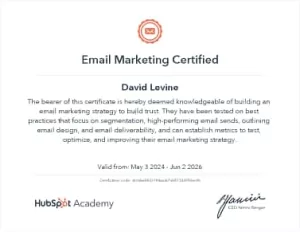
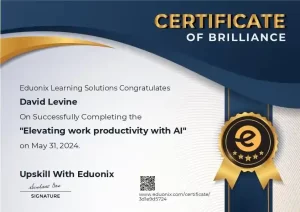
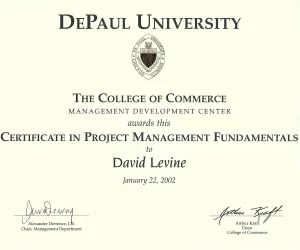
David Levine's Certifications
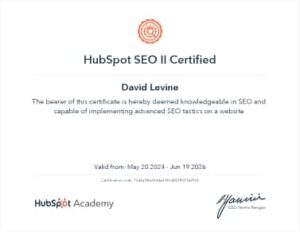
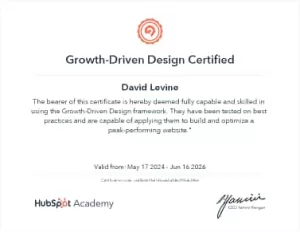
I am Your Virtual Professional Testimonials
David was nothing short of phenomenal to work with. He truly cares about his clients success, and always goes the extra mile to ensure things are done the right way, timely, and effectively. He is always keeping up with the latest trends in the market to provide his clients with the most up-to-date offerings, making me rest easy at night knowing that I have someone in my corner looking to only deliver the best results possible. I would highly recommend David to anyone looking to improve their digital presence”
David went above and beyond, building my life coaching website from start to finish. He answered my many questions with utmost patience and was honest if he had any limitations (he’s not a graphic designer but has good recommendations). His humor and charm made him very pleasant to work with. David even made me a glossary of terms when we first started when I said it all sounded like Chinese to me! Each request was honored quickly and efficiently.
Naively I hired a web designer on fiverr and did NOT receive what I asked for. When I turned to David, he listened and worked quickly, revised and reviewed with me the aspects of my website that I wanted changed. He set up Google analytics, my Google Business Profile, SEO, and fixed up the disaster that my website was. He advised on design for business cards and logo. I am extremely satisfied with the work David did and recommend him warmly to whomever wants someone honest, hardworking and efficient.
I had the pleasure to work with David on creating a new landing page for my business. His keen attention to detail greatly enhanced the Content, and his strategic feedback on outreach was invaluable. David is highly knowledgeable and focused on optimizing Content. His prompt responses and insightful suggestions ensured a smooth, efficient process from start to finish. I highly recommend David.
I had the pleasure of working with David Levine recently to enhance my e-commerce site, Yael’s Soups. Not only did David provide top-notch SEO services, but he also went above and beyond to assist me with business development, particularly in setting up Mishloach Manot packages for Purim. David’s expertise in SEO proved invaluable in optimizing my website’s visibility and driving traffic, resulting in increased sales and engagement. His practical approach and guidance throughout the process were helpful and effective. David also exhibited a genuine commitment to my business’s success, offering insightful coaching and encouragement every step of the way. His dedication and hands-on involvement truly set him apart. I wholeheartedly recommend David Levine to anyone seeking SEO services and business development assistance. With his expertise and support, I’ve seen real improvements in my online presence and sales performance. Thank you for your exceptional work, David!
David is thoughtful, thorough, and always does his due diligence to give me 110%. I unequivocally trust him. His attitude rightfully earns everyone’s respect. He quickly got me to the top of page one on Google! He is a true professional and someone that I highly recommend!
I can't say enough good things about our experience working with David Levine and his company, I Am Your Virtual Professional. From start to finish, David was an absolute pleasure to work with. He truly made it feel like he was a part of our team, always focused on what was best for our website and business.
Our old website was outdated and unprofessional, and we knew we needed a change. David stepped in and brought a wealth of creative ideas to the table, offering a fresh and modern direction that perfectly aligned with what we had envisioned. His approach is methodical and thorough, taking it step by step to ensure everything comes together beautifully.
What really impressed us was not just the stunning front-end design, but all the behind-the-scenes work David put in to make everything run smoothly. His attention to detail and commitment to delivering a top-tier website really set him apart. If you're looking for someone to handle your personal or company website, look no further than David Levine. He’s the expert you want in your corner, and I highly recommend him for any web design needs. You won’t regret it!
A year ago, my website was like a billboard in the desert — beautifully made but invisible. Then I engaged David at I Am Your Virtual Professional. He didn’t just tweak my site — he brought it to life. Now I’m ranking on page one of Google, sending smart emails, and testing marketing ideas I never would’ve thought of on my own. David’s creativity, patience, and drive to see me win make him feel less like a freelancer and more like a business partner who’s just as invested in my success as I am. He’s also incredibly quick to respond and always attentive to the details that matter most. If you’re serious about growing your business, he’s the one you want in your corner.