
Spotlight on Success
Featured Interview
Rabbi Scott “Shalom” Klein
“Spotlight on Success” is an interview series created by David Levine of I Am Your Virtual Professional. Its purpose is to amplify the voices of today’s business leaders. Each interview provides actionable insights that readers can implement immediately. No fluff, just practical wisdom that enables individuals to move forward with clarity and confidence.

Rabbi Scott “Shalom” Klein


| Company | U.S. Army |
|---|---|
| Role | Chaplain |
| LinkedIn Profile | linkedin.com/in/shalomklein |
| Website | www.syklein.com |
| I am Rabbi Scott “Shalom” Klein, a U.S. Army Chaplain (Captain) serving with the 82nd Airborne Division at Fort Bragg. Driven by a profound dedication to our nation and its service members, my mission centers on cultivating spiritual readiness, providing institutional mentorship, and building moral resilience in high-stress tactical environments. Beyond my military ministry, I serve as a disaster response consultant and host the syndicated radio program and podcast *Get Down To Business*. I am deeply passionate about strategic communication, leadership development frameworks, and expanding the ways we care for and strengthen our military community. |
Who Should You Nominate?
- Leaders doing meaningful work
- People with insights others can learn from
- Voices worth elevating
Interview Questions
1. What’s one strategy your business used recently that created meaningful growth?
As an Army Chaplain, my “business” is the spiritual readiness and moral resilience of our nation’s Soldiers. Recently, we achieved massive organizational growth by shifting from traditional, classroom-style lectures to immersive, adventure-based resiliency programs. This experiential approach drastically increased trust and engagement, allowing us to build deeper mental toughness across the unit.
2. How has AI or technology changed the way you operate or serve clients?
Serving those who defend our country requires constant accessibility, and technology has completely modernized how we deliver pastoral care. By leveraging secure, mobile-friendly scheduling and digital communication tools, we have broken down traditional institutional barriers, allowing Soldiers to easily connect with counseling resources and support exactly when they need it.
3. What’s one thing you stopped doing that actually helped your business grow?
To truly serve our personnel, I stopped relying on a top-down, rigid instruction style for leadership development. Shifting away from a detached, podium-centric approach to focus instead on peer-level, ground-level mentorship allowed for more authentic connections, directly strengthening the moral fabric and culture of the organization.
4. What’s a customer insight you discovered that changed the way you do business?
In military ministry, your impact relies entirely on your willingness to share in the daily reality of your people. The profound insight that changed my approach is that people don’t care how much you know until they know how much you care; effectiveness doesn’t come from a rank or a title, it comes from walking the ground and being present in their workspace.
5. If a business had to improve ONE area to grow faster in the next 90 days, what should it be?
Organizations looking to optimize their performance must ruthlessly prioritize proactive communication and trust-building. Focusing heavily on vertical transparency and peer connection over the next 90 days creates an immediate spike in morale, significantly lowers burnout rates, and sharpens operational execution under pressure.
6. What’s one thing you do consistently that keeps your pipeline healthy?
To ensure our counseling and support pipelines remain open and highly trusted, I maintain a relentless routine of active presence and visibility—what we in the military call “battlefield circulation.” Consistently visiting different sub-units and checking in on personnel during intense training ensures they know exactly where to turn before a crisis hits.
7. What’s a decision you made in the last year that had a bigger impact than you expected, and what led you to make it?:
Driven by a passion to creatively tackle operational stress, I made the decision to partner with specialized veteran and community organizations for an intensive resiliency program iteration. The long-term boost this collaboration gave to team cohesion, trust, and individual well-being far exceeded our initial expectations and set a new standard for unit care.
8. What’s one process you streamlined that made a noticeable difference in efficiency or results?
We streamlined the intake and referral process for crisis care and behavioral support within our organization. By removing unnecessary administrative layers and standardizing direct-line counseling access, we drastically reduced response times, ensuring that individuals in high-stress environments receive the right resources immediately.
9. What book, podcast, or resource has influenced your thinking or business decisions lately and why?
Hosting and syndicating the Get Down To Business radio show and podcast has heavily influenced my strategic thinking. Engaging weekly with diverse organizational leaders has reinforced just how universal the core principles of strategic communication, institutional mentorship, and disciplined leadership truly are, allowing me to bring fresh, battle-tested insights back to my military service.
Who Should You Nominate?
- Leaders doing meaningful work
- People with insights others can learn from
- Voices worth elevating
I am Your Virtual Professional's
3 Key Takeaways
# 1
Meaningful growth comes from engagement, not just information.
A key theme throughout Rabbi Klein’s responses is the shift from classroom-style instruction to immersive, experience-based programs and peer-level mentorship. Whether serving Soldiers or leading teams, deeper participation creates stronger trust, better outcomes, and more lasting growth than one-way communication.
# 2
Technology works best when it removes barriers to connection.
Rather than using technology for its own sake, Rabbi Klein leverages digital communication and scheduling tools to make support easier to access. The lesson for any organization is that systems and technology should simplify access, strengthen responsiveness, and help people get what they need faster.
# 3
Visibility, trust, and relationships are the foundation of sustainable success.
From maintaining a healthy pipeline through active presence, to improving performance through proactive communication, to partnering with outside organizations for greater impact, Rabbi Klein consistently emphasizes that trust is built through showing up. Strong relationships create stronger cultures, better collaboration, and more resilient organizations.
Who Should You Nominate?
- Leaders doing meaningful work
- People with insights others can learn from
- Voices worth elevating
Join the Spotlight Insider List for early access to new interviews and insights
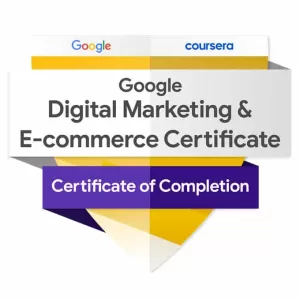
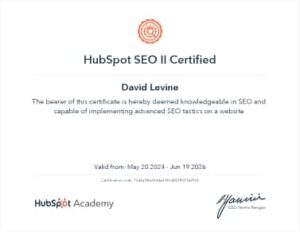
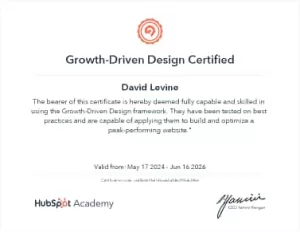
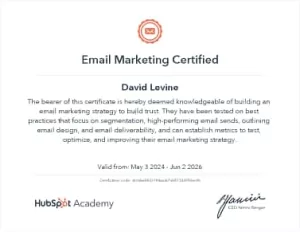
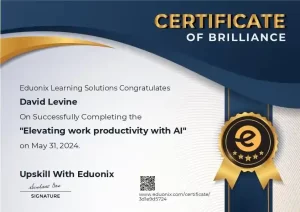
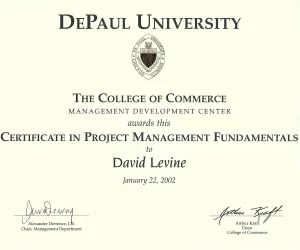
David Levine's Certifications
I am Your Virtual Professional Testimonials
David went above and beyond, building my life coaching website from start to finish. He answered my many questions with utmost patience and was honest if he had any limitations (he’s not a graphic designer but has good recommendations). His humor and charm made him very pleasant to work with. David even made me a glossary of terms when we first started when I said it all sounded like Chinese to me! Each request was honored quickly and efficiently.
Naively I hired a web designer on fiverr and did NOT receive what I asked for. When I turned to David, he listened and worked quickly, revised and reviewed with me the aspects of my website that I wanted changed. He set up Google analytics, my Google Business Profile, SEO, and fixed up the disaster that my website was. He advised on design for business cards and logo. I am extremely satisfied with the work David did and recommend him warmly to whomever wants someone honest, hardworking and efficient.
I had the pleasure to work with David on creating a new landing page for my business. His keen attention to detail greatly enhanced the Content, and his strategic feedback on outreach was invaluable. David is highly knowledgeable and focused on optimizing Content. His prompt responses and insightful suggestions ensured a smooth, efficient process from start to finish. I highly recommend David.
David is thoughtful, thorough, and always does his due diligence to give me 110%. I unequivocally trust him. His attitude rightfully earns everyone’s respect. He quickly got me to the top of page one on Google! He is a true professional and someone that I highly recommend!